PRD vs BRD: which one you actually need (probably not both)
One explains why the business wants it. The other explains what the product will do. Most teams write both and then let them drift apart.

Here's the short answer.
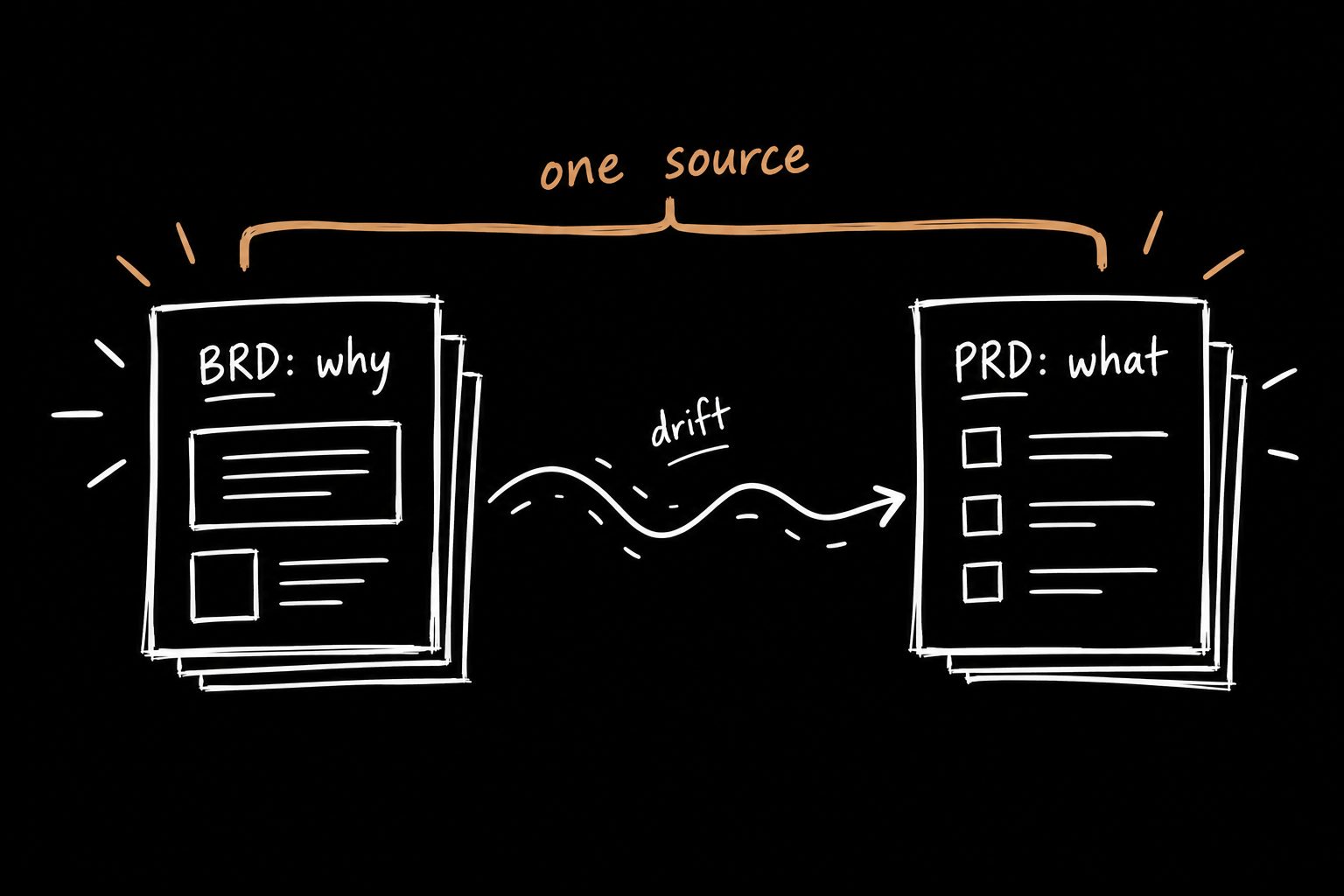
A BRD (business requirements document) explains why the business wants something.
A PRD (product requirements document) explains what the product will do to get there.
That's the whole difference. The rest is detail. But the detail matters, because most teams that write both end up with two docs that quietly contradict each other by week three.
PRD vs BRD at a glance
| BRD | PRD | |
|---|---|---|
| Question it answers | Why are we doing this? | What exactly are we building? |
| Audience | Leadership, finance, stakeholders | Product, design, engineering |
| Owner | Business analyst or business lead | Product manager |
| Contents | Goals, market context, revenue impact, budget, risks | Requirements, scope, out of scope, success metrics, open questions |
| Level of detail | Strategic | Feature level |
| When it's written | Before a project is approved | Before and during the build |
What goes in a BRD
A BRD makes the case for spending money. It usually covers:
- The business objective
- The market or customer problem
- Expected revenue, cost savings or risk reduction
- Budget and timeline at a high level
- Stakeholders and success criteria for the business
It's written for the people who approve the project, not the people who build it.
What goes in a PRD
A PRD turns that case into something a team can build. It usually covers:
- The objective and how you'll measure success
- Problems and pain points
- MVP requirements
- What's explicitly out of scope
- Open questions with owners
If you want the exact sections I use, here's the PRD template I actually use, with a filled-in example.
The problem with having both
On paper, two docs make sense. Strategy in one, execution in the other.
In real life, here's what happens.
The BRD gets written, approved, and never opened again. It has the lifespan of a New Year's gym membership. The PRD gets written by someone else, weeks later.
Scope changes during the build. The PRD gets updated. The BRD doesn't.
Now the business case says one thing and the product does another. Two docs, zero truth. Congrats, you've built a very expensive way to argue. And when someone asks "did this work?", nobody can agree what the hell "work" was supposed to mean.
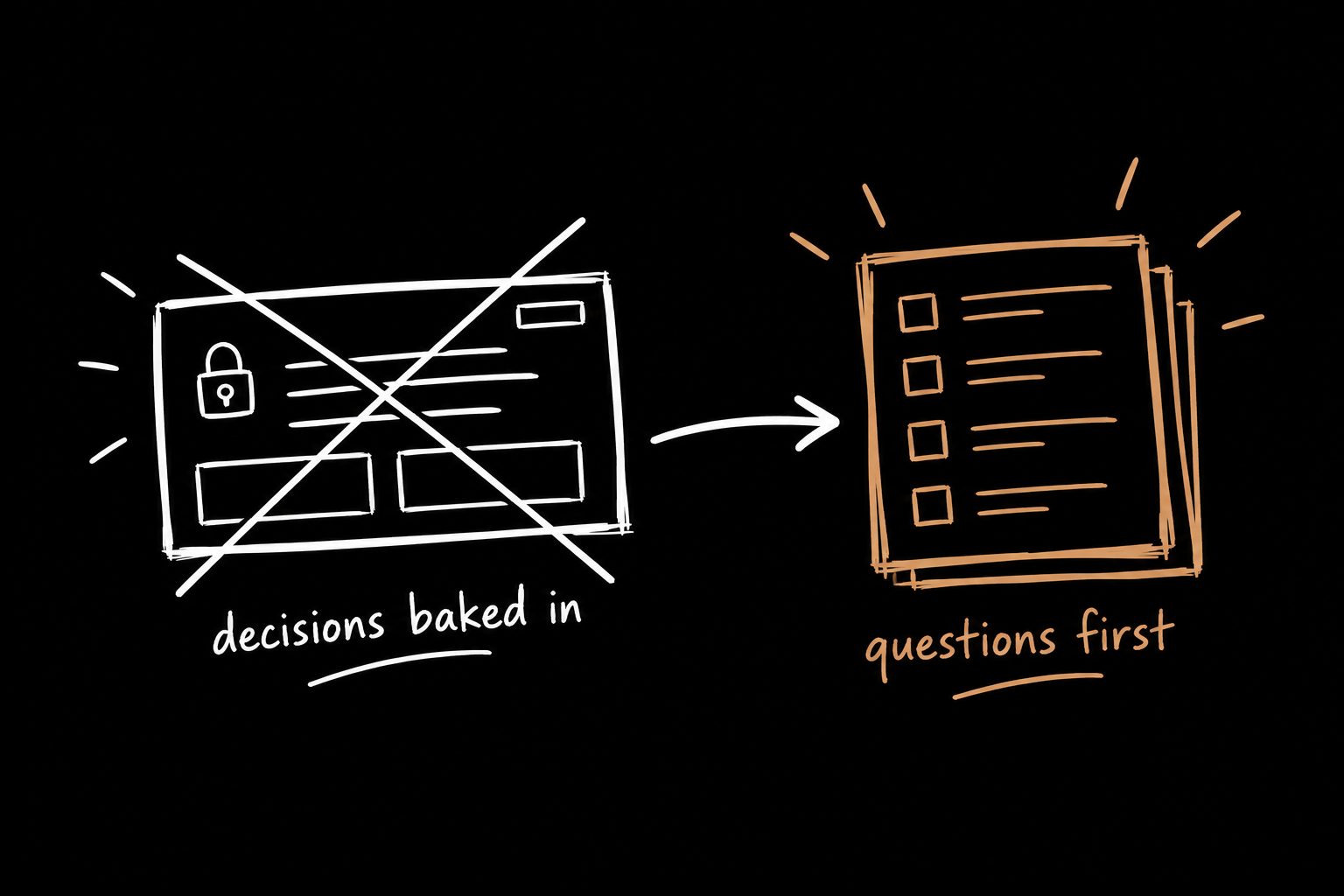
That's not a documentation problem. It's a decision problem. The decisions got made in different rooms, by different people, at different times.
Which one do you actually need?
Use one doc. For most product teams building features, a single PRD with a solid business case section beats a BRD plus a PRD every time.
The trick is putting the "why" inside the PRD instead of in a separate file:
- Objective and success metric cover the business goal
- ROI analysis covers the bet, the team cost, and the decision between options
- Out of scope covers what the business agreed not to pay for
That's the structure in my template. One doc. One source of truth. Business case and requirements can't drift apart because they're on the same page.
Use a separate BRD when you genuinely need approval before any product work starts. Big budget decisions, regulated industries, new product lines, or anything that needs a finance sign-off before a team gets assigned.
Where the product brief fits
There's a third doc people mix in here: the product brief.
Think of it as a lightweight BRD. One page that decides whether a problem is worth solving at all, before you commit a team. If it is, the brief grows into the PRD.
Here's a product brief template if you want that starting point.
So the order looks like this:
- Product brief: should we solve this?
- Kickoff: what exactly are we building, in what time, and what are we not doing?
- PRD: the written record of those decisions
The fastest way to get a good PRD
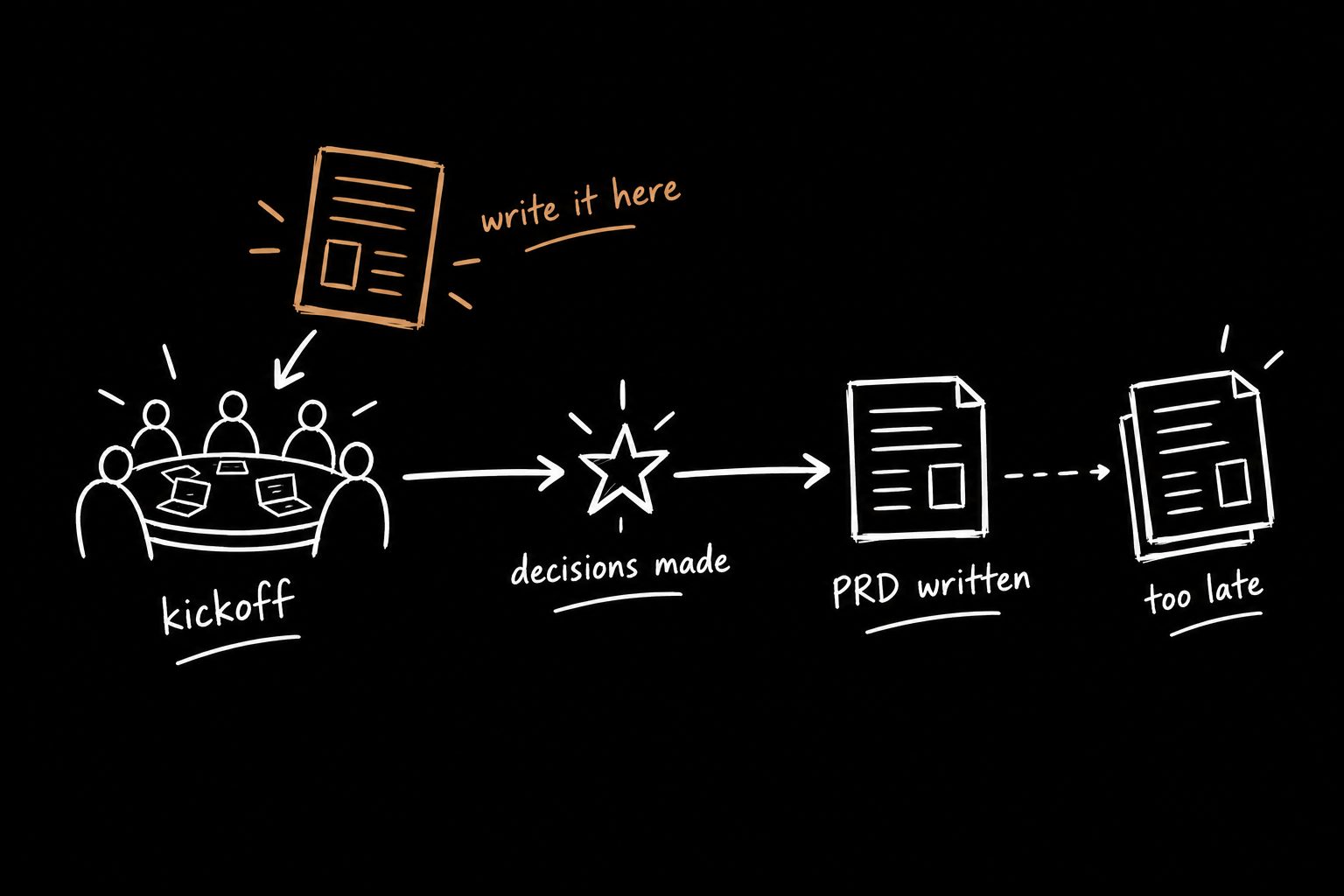
Write it during the kickoff, not after.
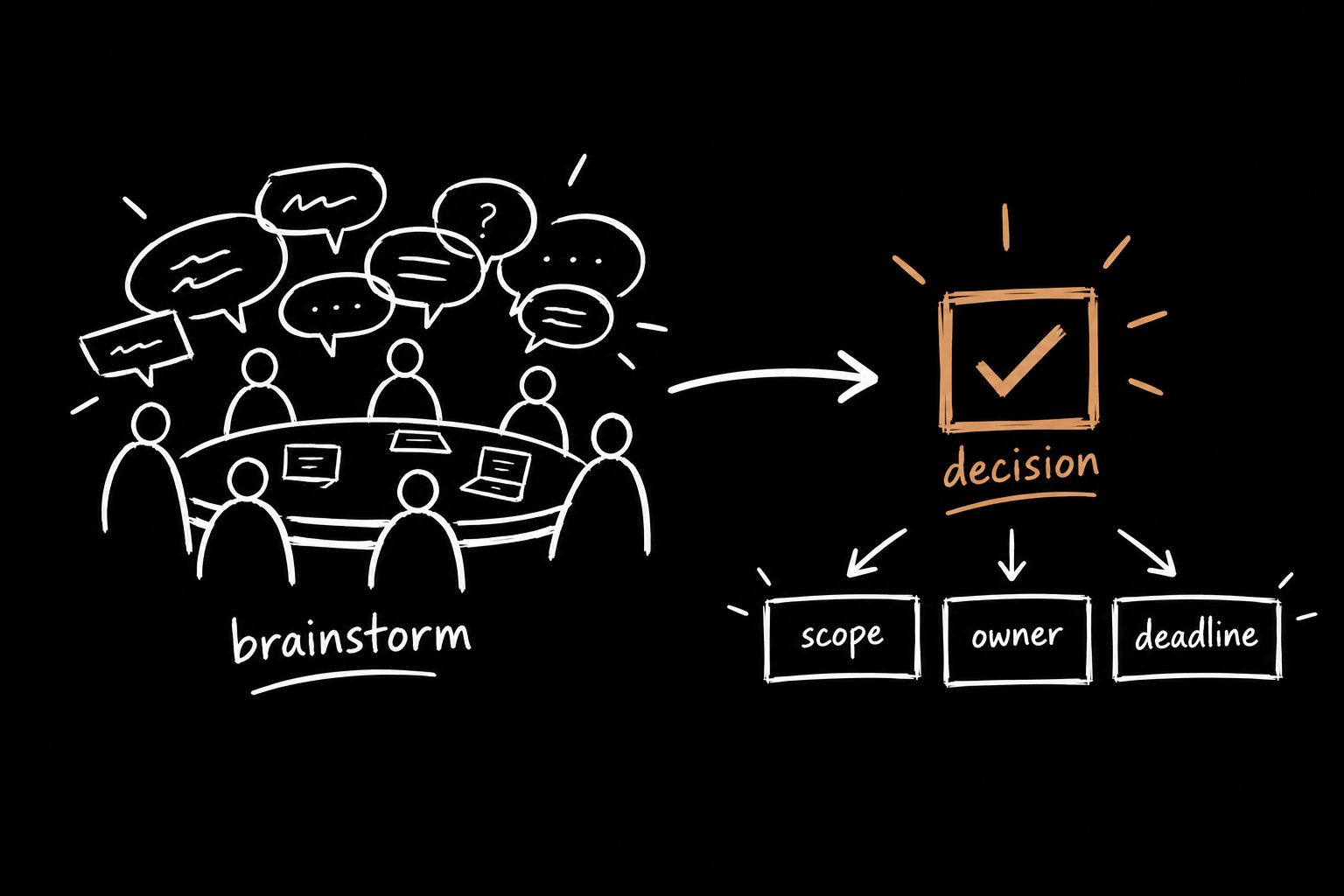
If you run a project kickoff meeting that forces the room to answer what you're solving, what you're not solving, how much time you have and what tradeoffs you'll accept, you've already got most of the PRD. Record the call and the transcript has the rest.
That's what Builder Kickoff™ is built for. You run the session once, and walk out with the PRD, the business case and the prototype direction the same day. No separate BRD to keep in sync.
PRD vs BRD FAQ
Is a PRD the same as a functional spec?
No. A PRD says what the product needs to do and why. A functional spec goes deeper into exactly how each piece behaves. Many teams skip the formal spec and let design and engineering work it out from the PRD.
What's an MRD?
A market requirements document. It covers the market opportunity and customer needs, usually before a BRD or PRD. It's more common in hardware and large enterprise products than in SaaS feature work.
Who approves a PRD?
Usually the product lead, with engineering and design signing off on feasibility and scope. If leadership needs to approve the spend, that's the job a BRD or the PRD's ROI section does.
How do I measure whether the PRD's goals were met?
Pick the success metric before you build, with a baseline and a target. If you need help choosing, start with the UX metrics that actually make it into the exec deck.